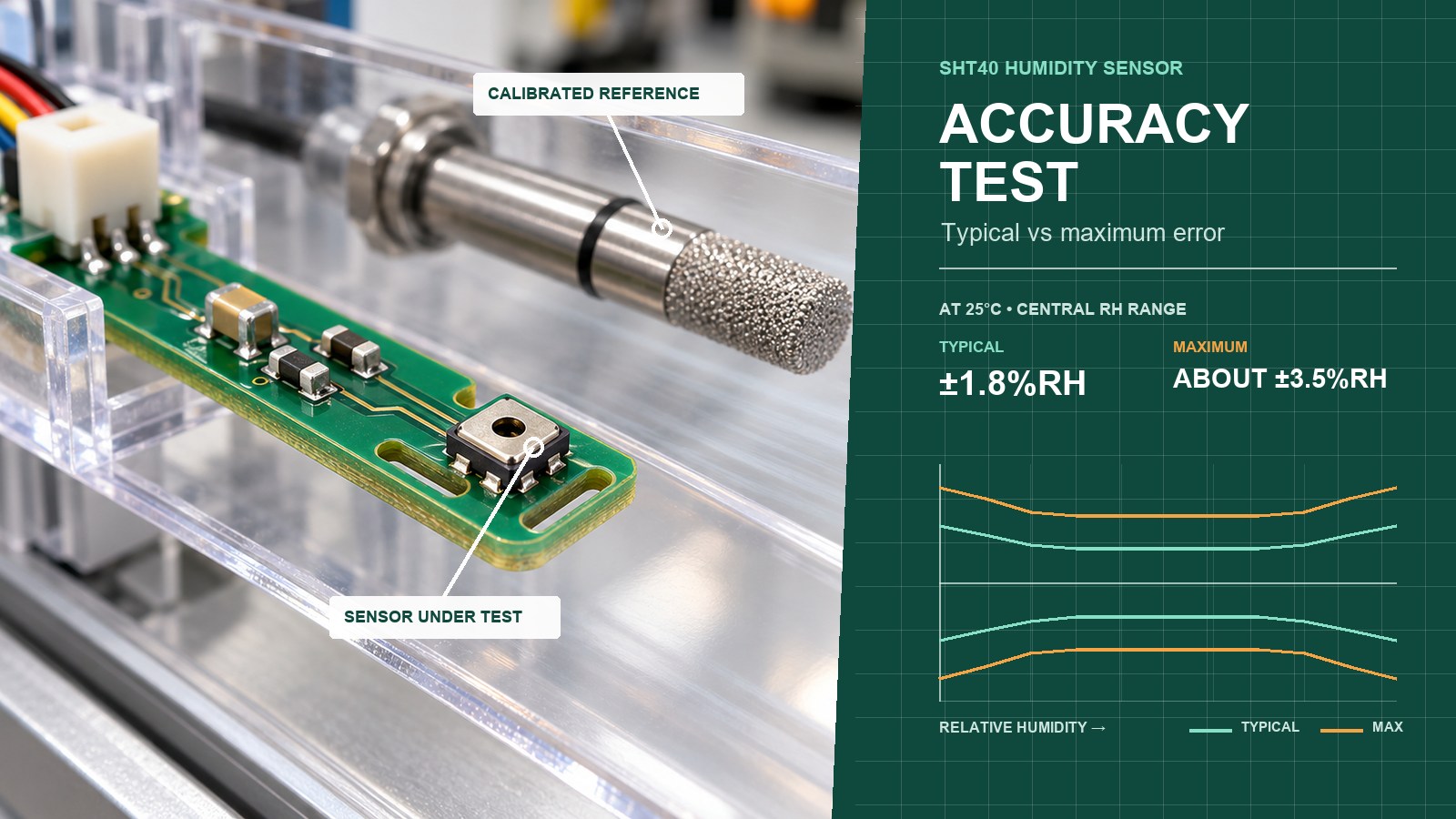
SHT40 Accuracy: Typical vs Maximum Error Explained
Read typical and maximum SHT40 error curves, estimate PCB and enclosure bias, and assess finished-product accuracy claims.

RFID & Contactless Technology
Follow practical engineering notes for contactless reader development, including lessons from MFRC522-based prototypes and design resources for Nyfea NF522 and NF663 reader ICs.
Design guidance, troubleshooting workflows and application notes from Nyfea engineering.
Read typical and maximum SHT40 error curves, estimate PCB and enclosure bias, and assess finished-product accuracy claims.
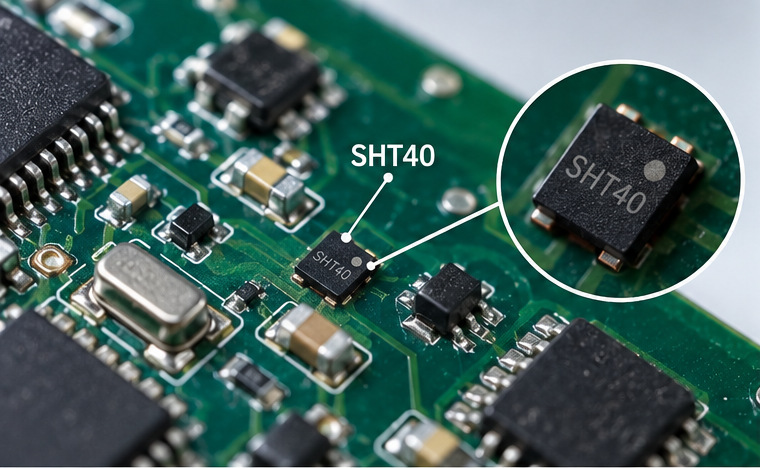
Compare typical measurement current and heater peaks, calculate a 3.3 V sensor power budget, and check battery life against whole-system load and supply droop.
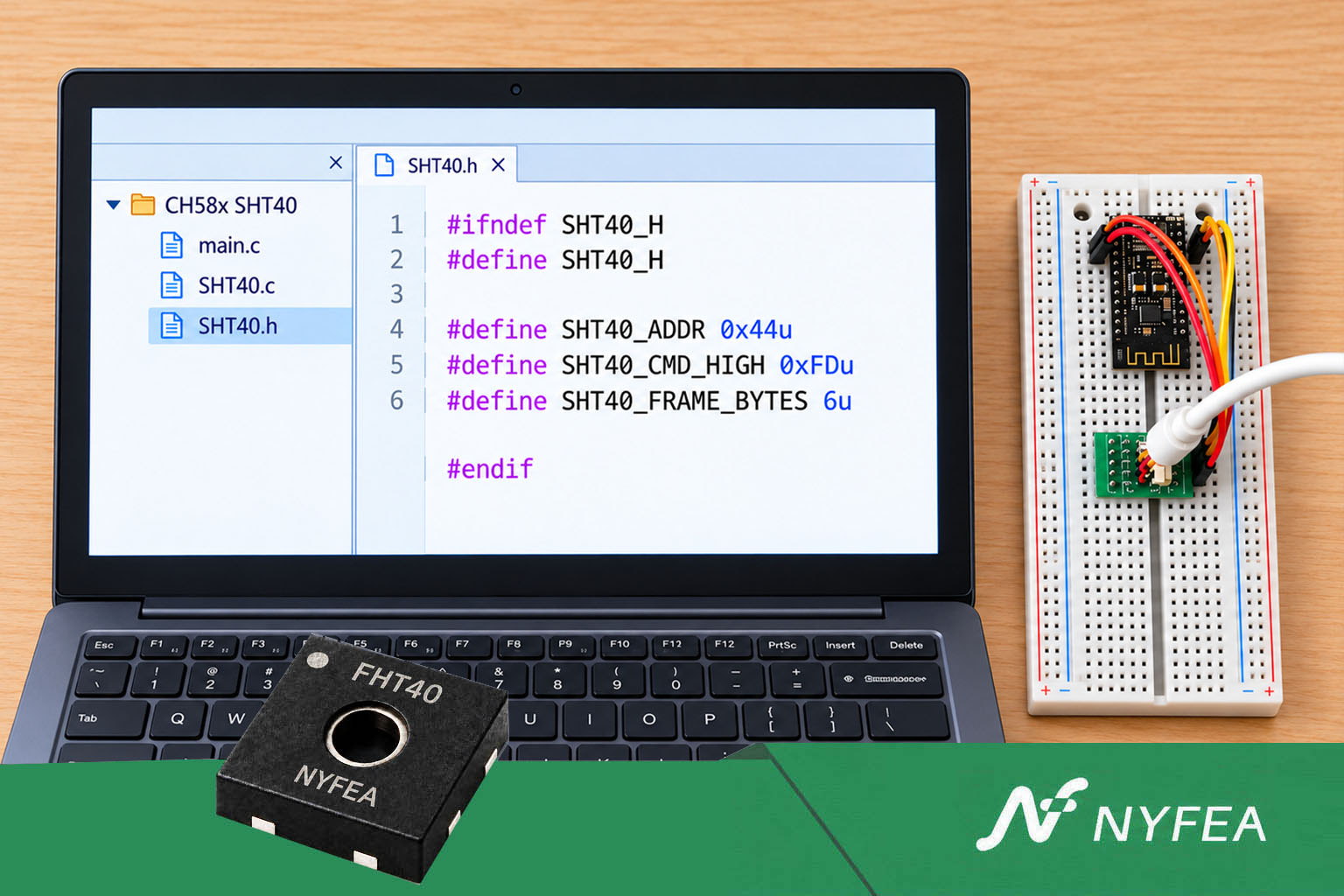
Verify CH585–SHT40 wiring and address format, read the six-byte response, check both CRC bytes, and diagnose I²C bus faults.
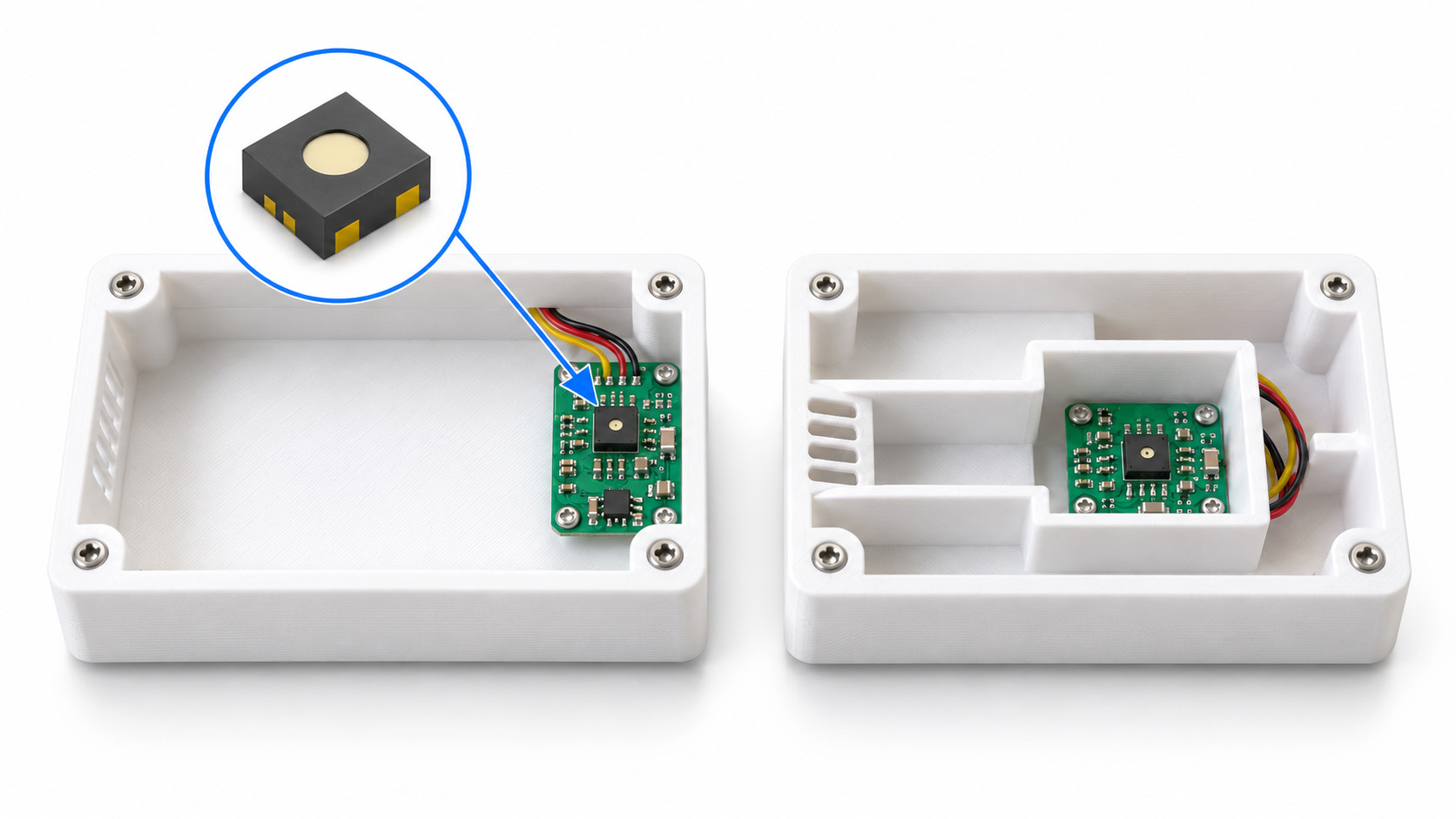
Diagnose slow or biased SHT40 readings by checking sensor placement, air paths, trapped volume, PCB heat and splash protection before applying a software offset.
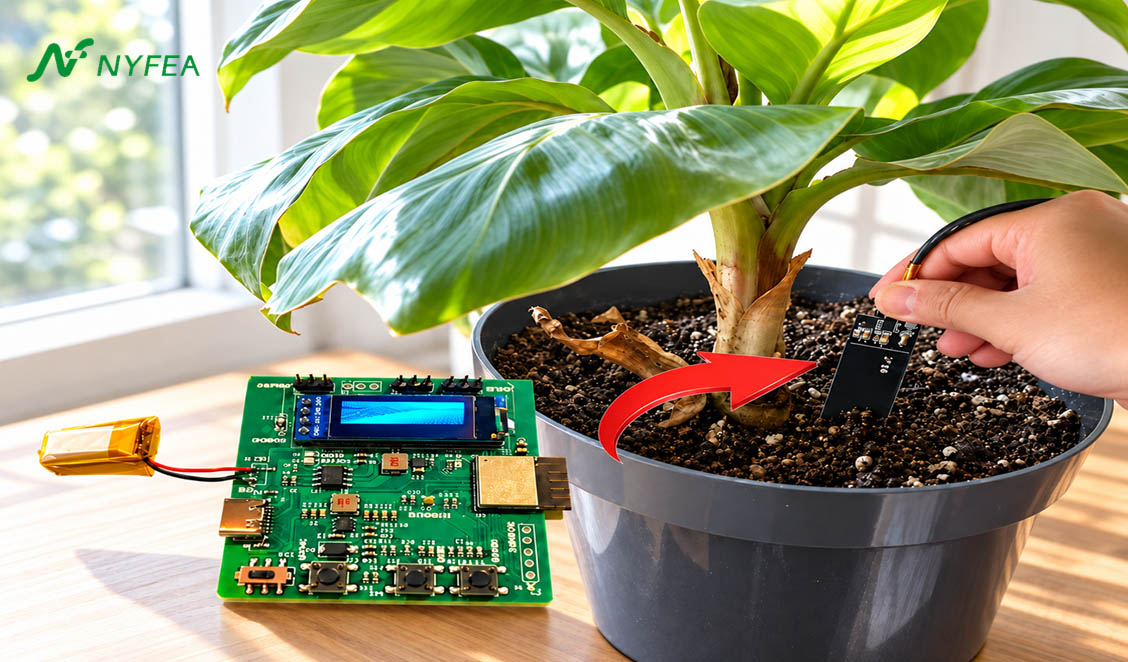
An SHT40 can return complete, CRC-valid I2C data while reporting temperature above and relative humidity below the intended ambient conditions. This guide separates PCB heating, enclosure bias and slow air exchange with a controlled four-state experiment.
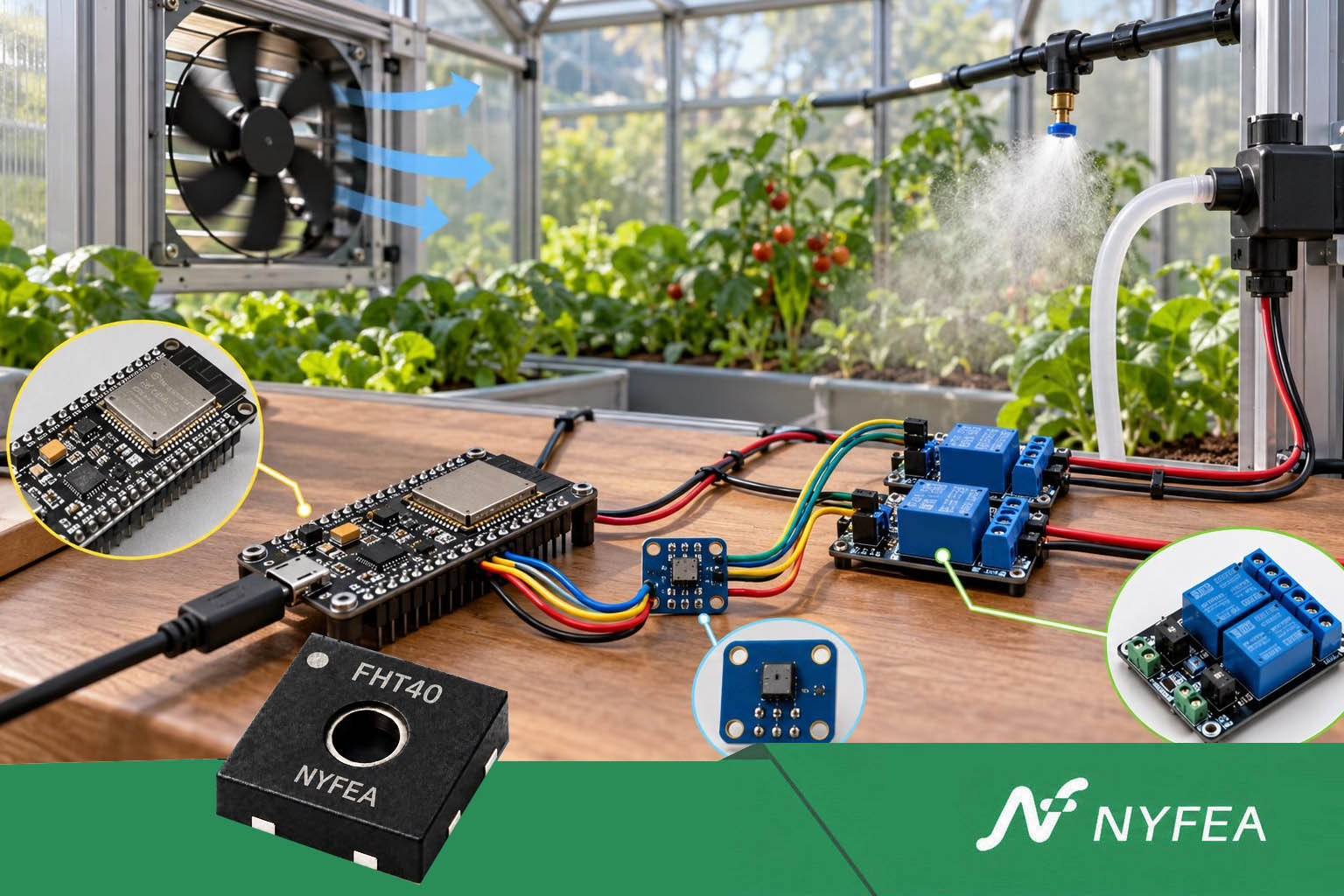
Wire an ESP32 to an SHT40 for greenhouse monitoring, then review heater-safe sampling, relay interlocks, Arduino code and commissioning checks.
Learn SHT40 ESP32 wiring, I2C address, Arduino code, CRC check, I2C scanner, ESP32-S3/C3 pin notes and troubleshooting.
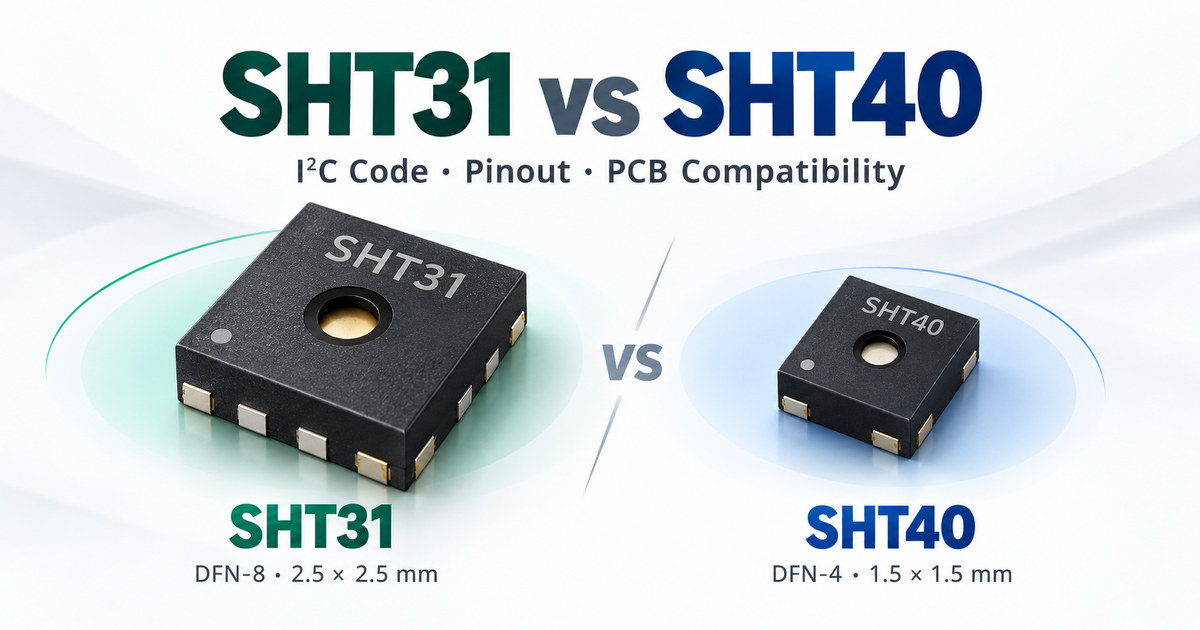
Can SHT40 replace SHT31? Compare accuracy and power trade-offs, map the pin changes, and verify the model-specific commands and humidity formula with ESP32 code.
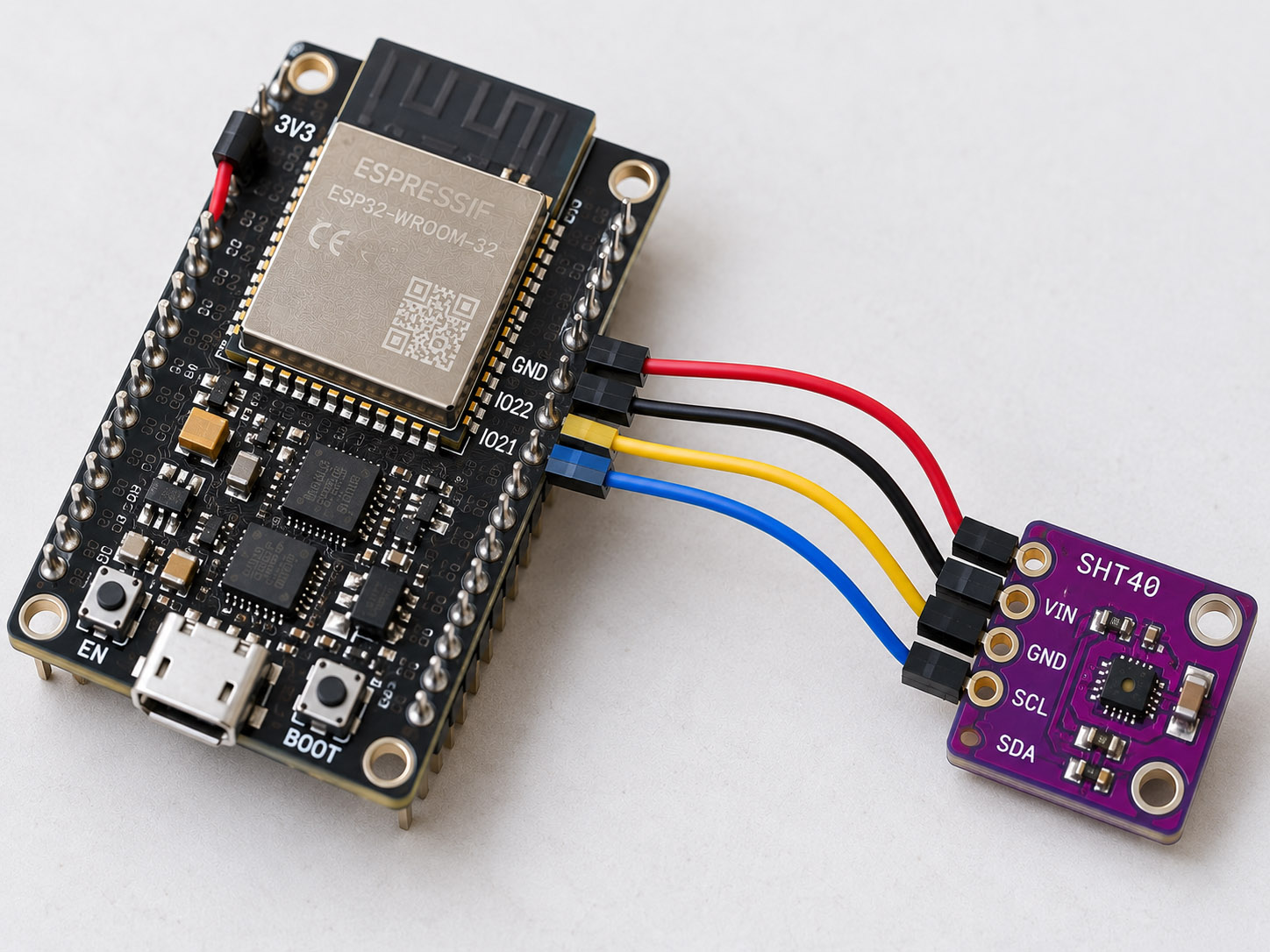
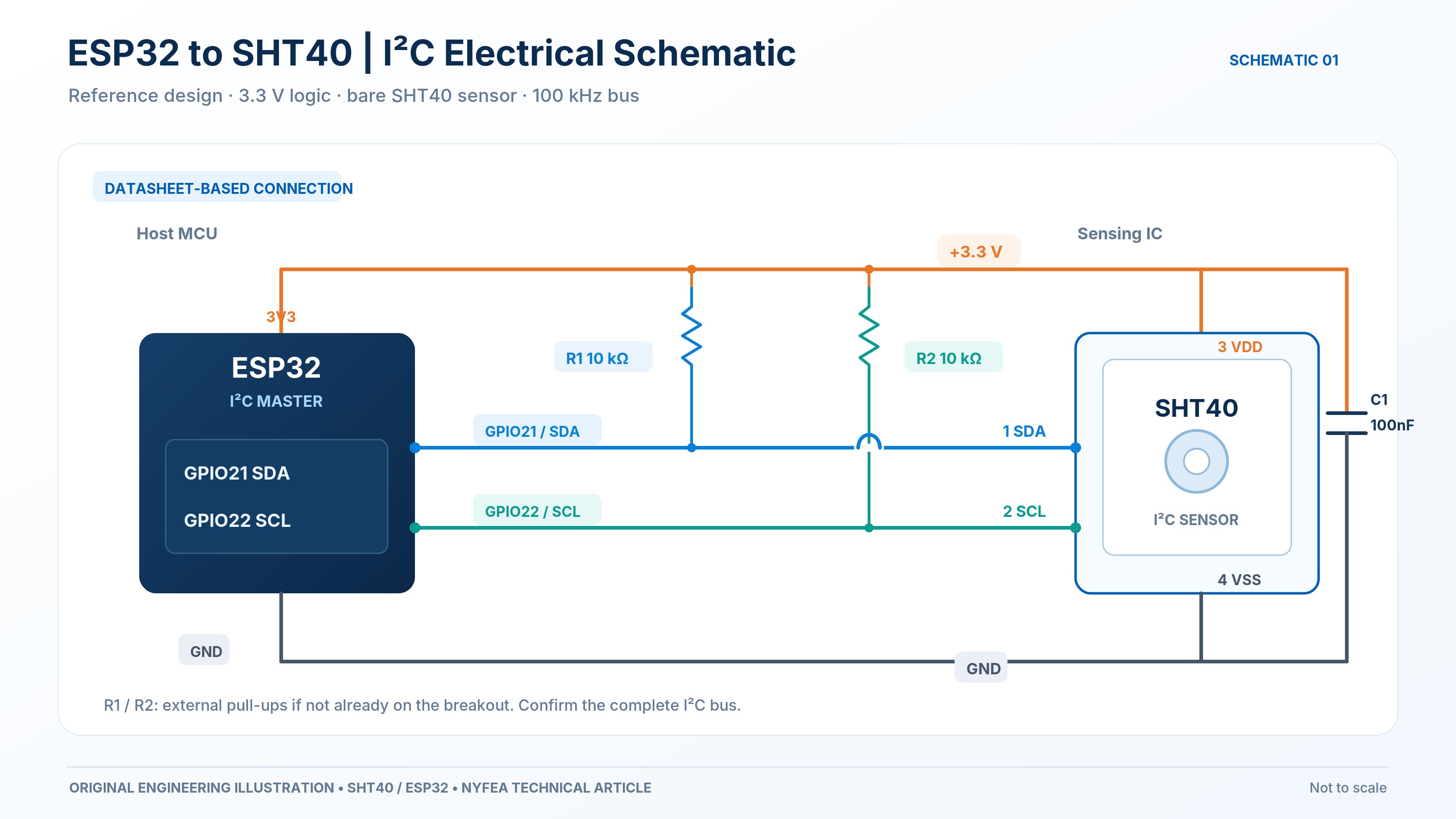
Connect the SHT40 to an ESP32, scan 0x44, run a complete CRC-checked sketch, and interpret serial statuses before trusting a temperature or humidity reading.
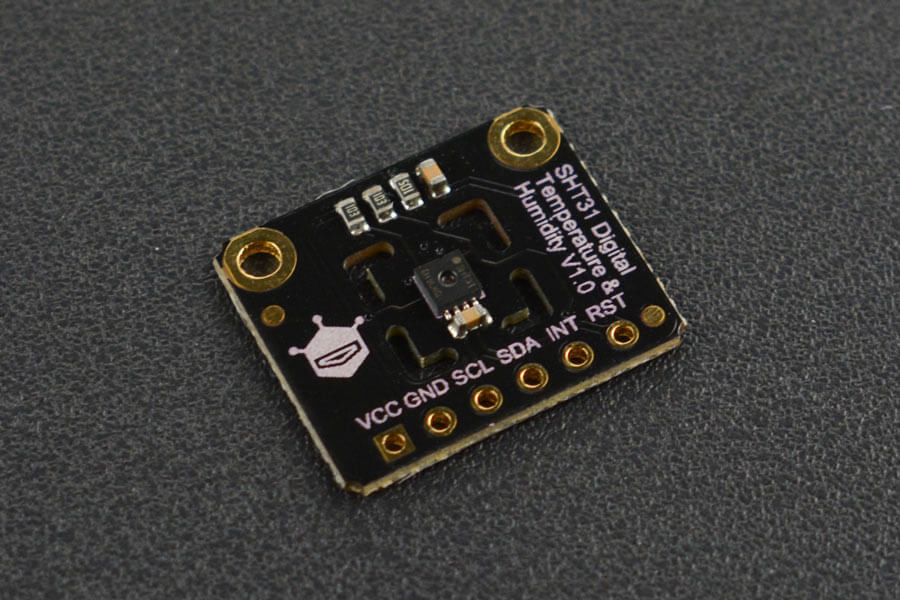
Wire the SEN0331 to Arduino Uno, check 0x44/0x45, log valid single-shot readings, then choose periodic sampling and diagnose ALERT behavior.
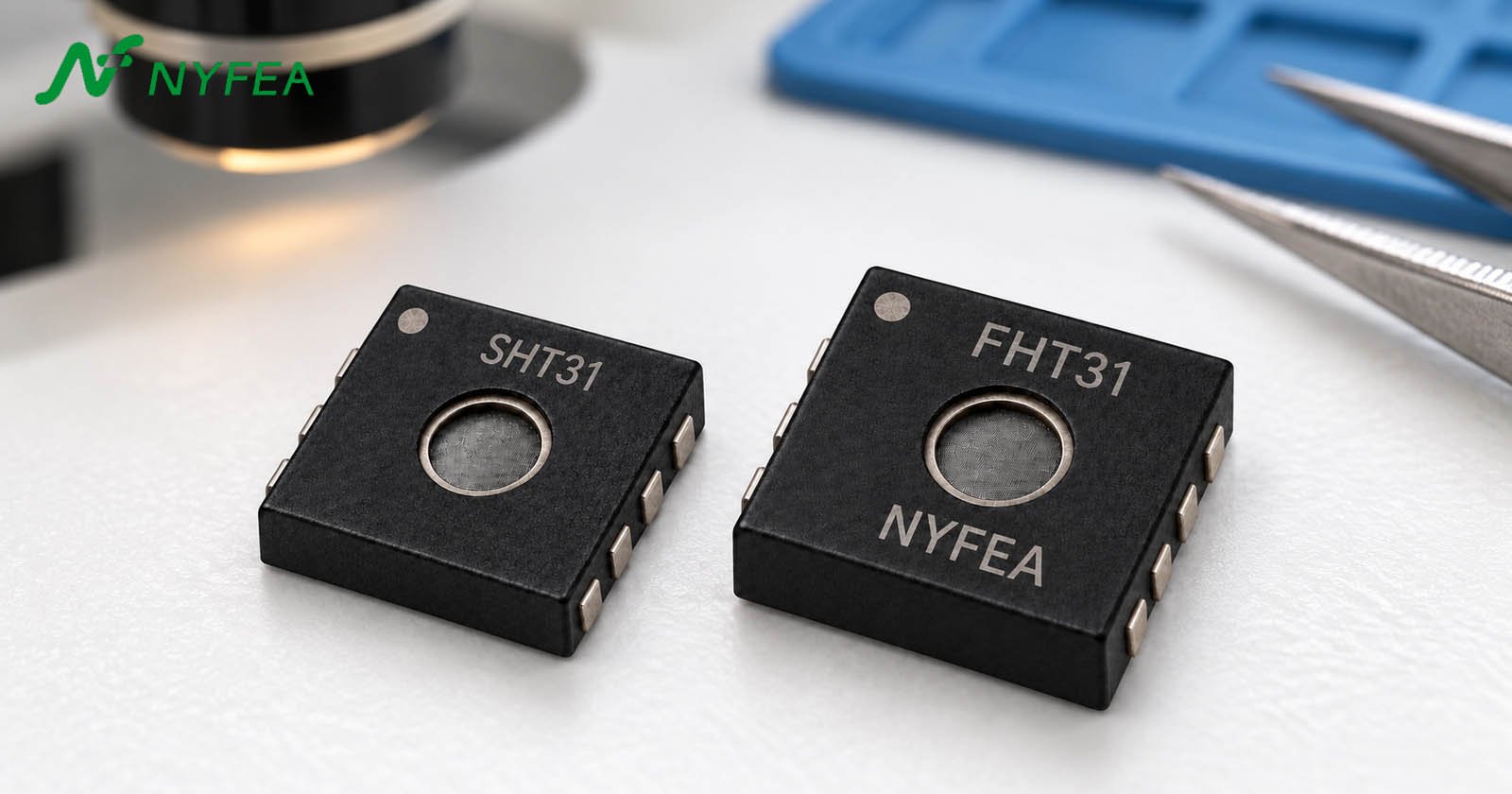
Compare SHT31 and FHT31 package fit, pin behavior, I²C commands, CRC, measurement performance and production evidence before approving a project-level replacement.
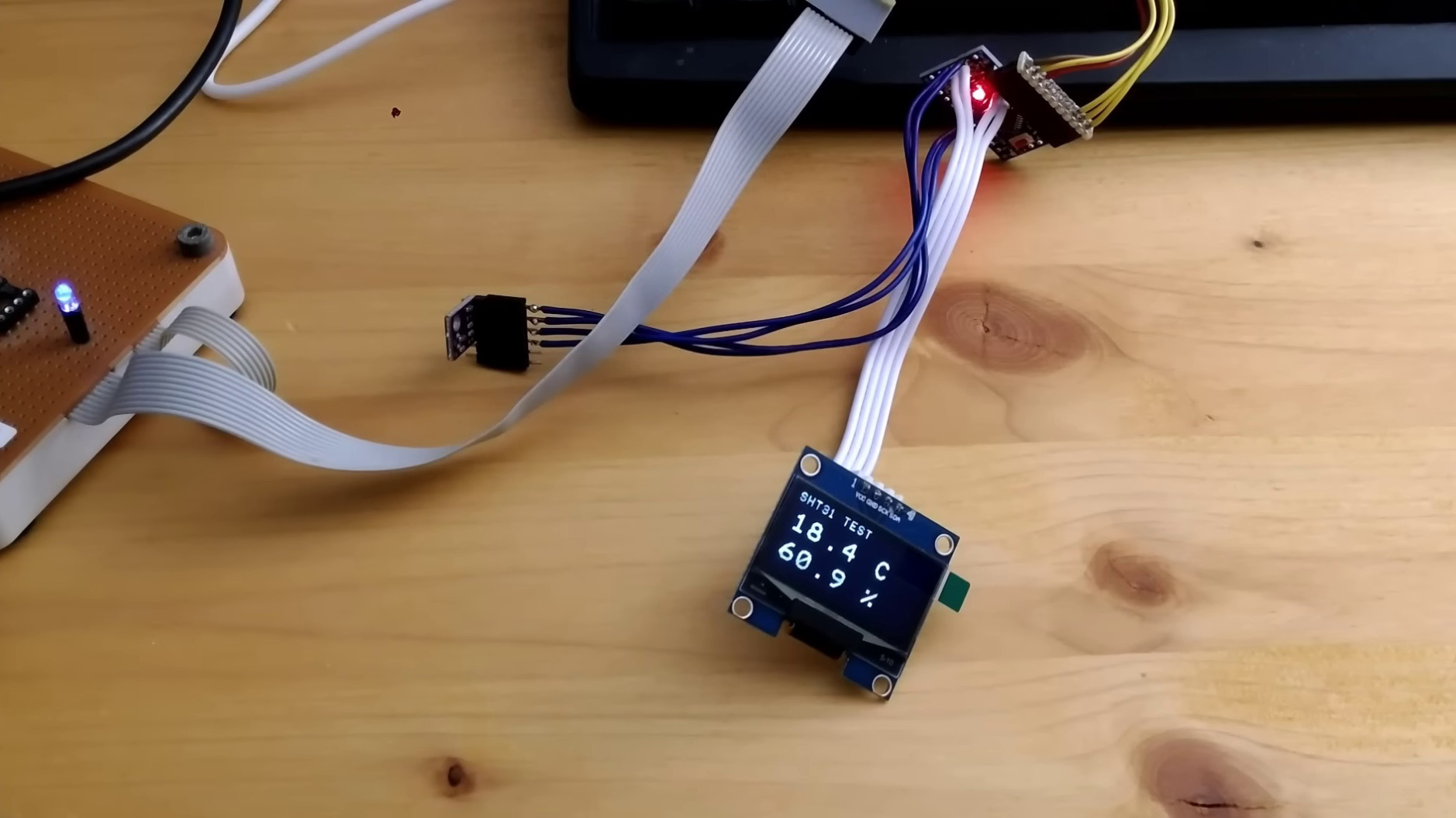
Send the SHT31 0x2400 measurement command, read the six-byte I²C response, verify separate temperature and humidity CRC-8 checks, convert the raw values, and diagnose NACK or checksum failures.
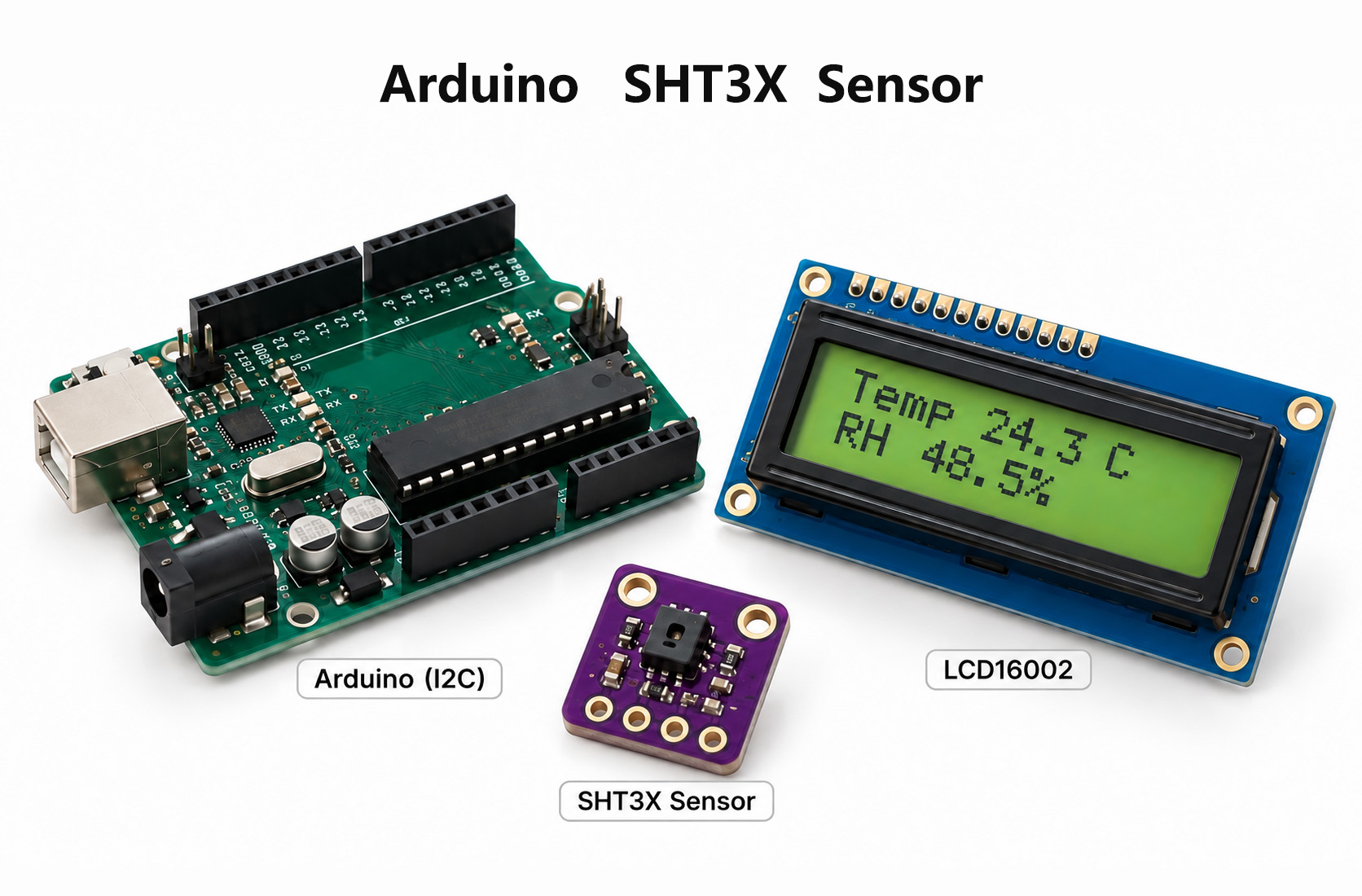
Connect an SHT31 sensor to Arduino Uno, wire the I2C bus, install the library, upload checked code, and validate temperature and humidity readings at 9600 baud.
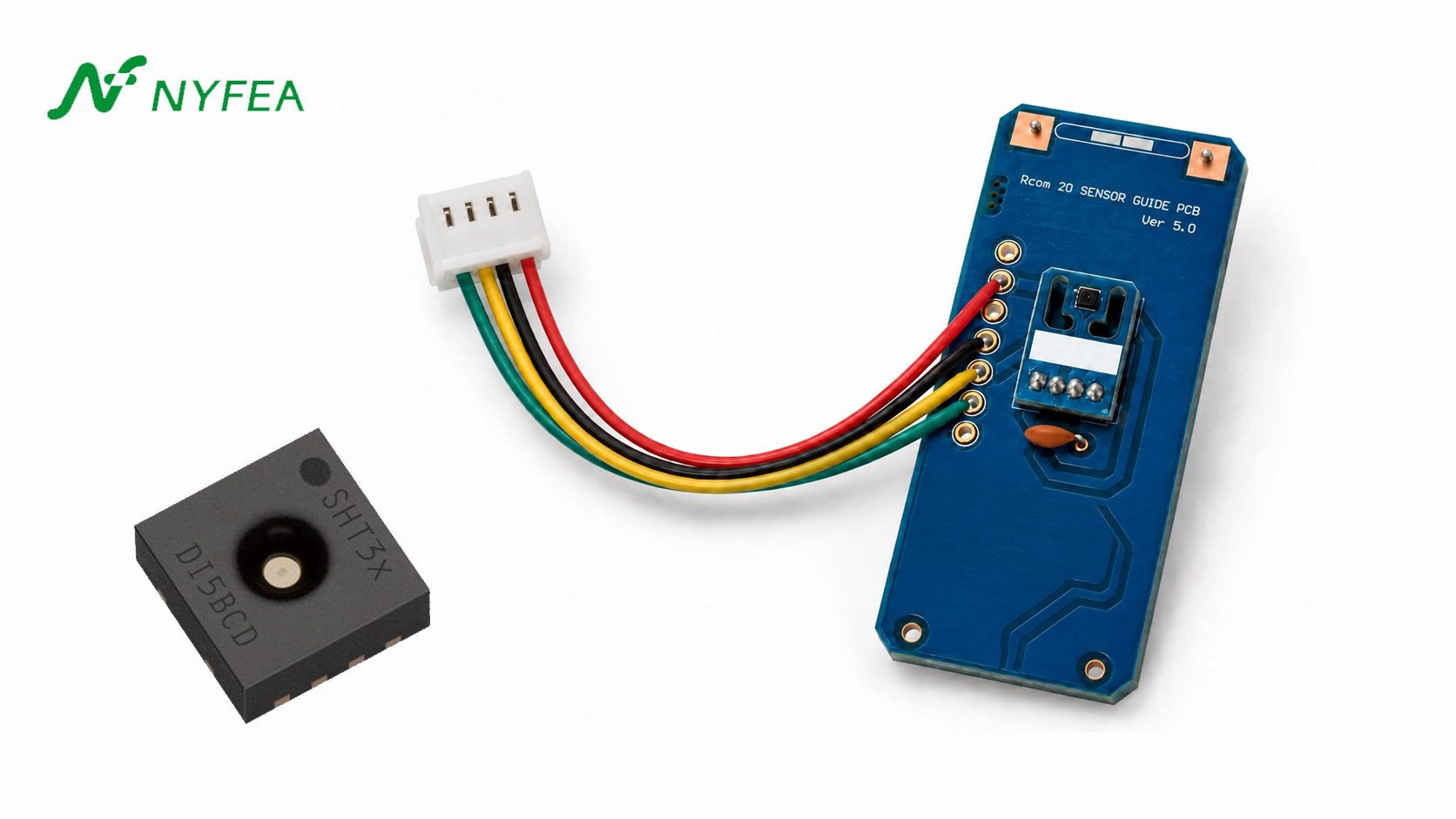
Connect the SHT30 to Arduino over I2C, scan for 0x44 or 0x45, then read temperature and humidity with a compatible library. If the sensor is detected but returns NaN, check power, pull-ups and the physical bus before rewriting the code.
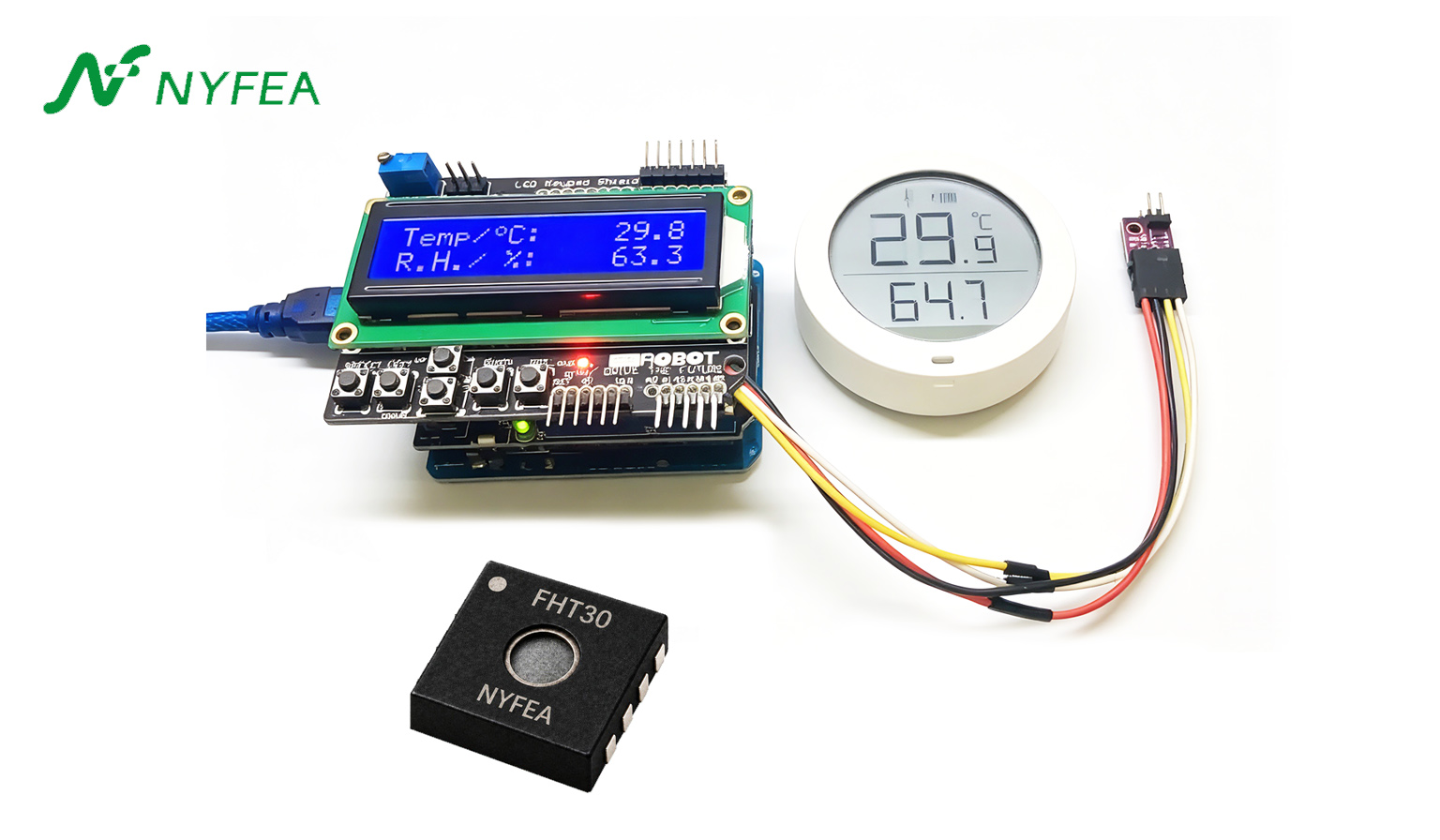
A reading that shifts after prolonged high humidity is not automatically a failed sensor. The useful question is whether the cause is reversible moisture uptake, actual condensation, contamination, a temperature gradient—or a combination of them.
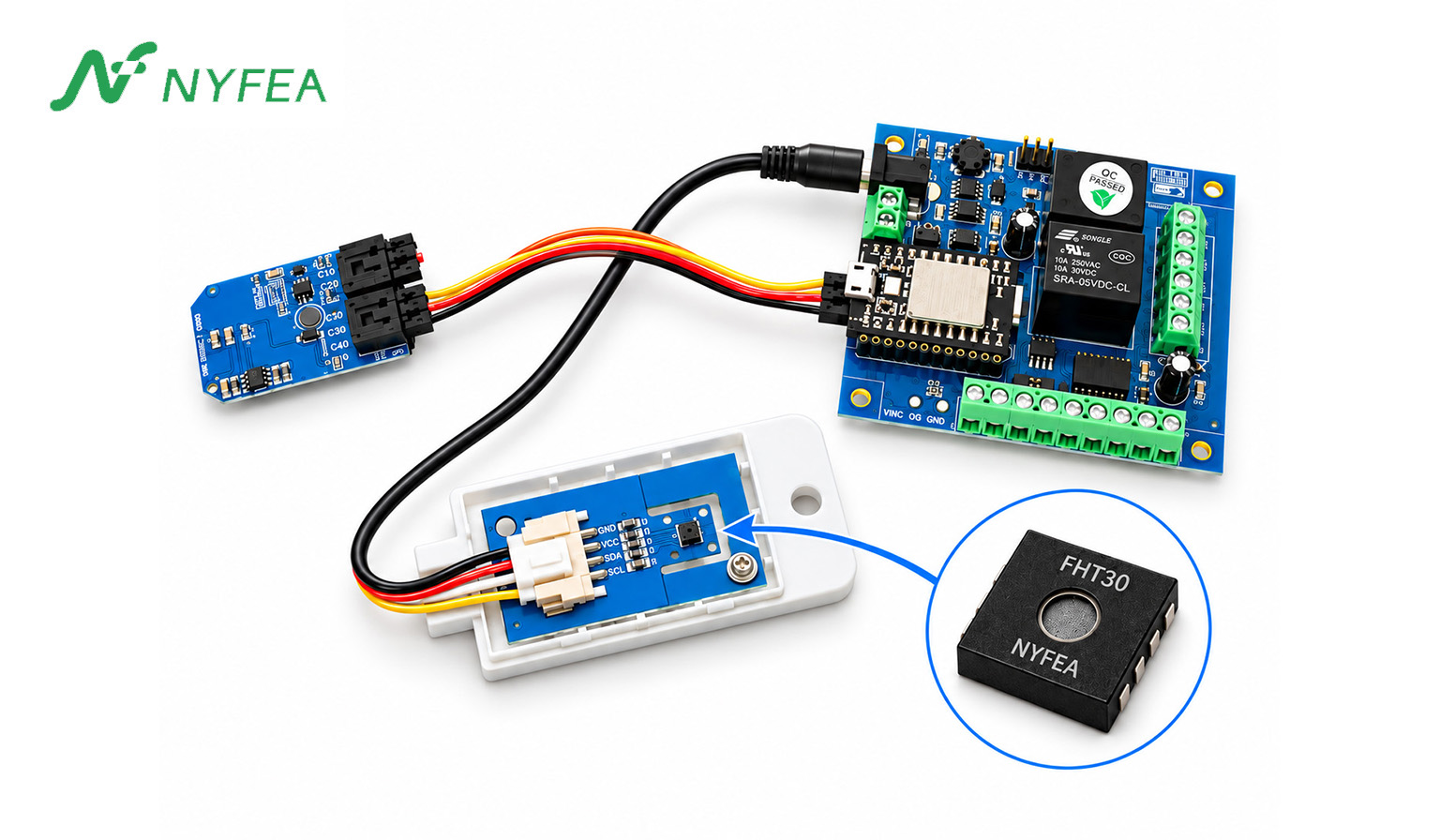
An SHT30 can return valid I²C frames and still report a temperature two or three degrees above the air you intended to measure. Before changing calibration, determine whether the sensor is measuring the room, a warm PCB, or air already heated inside the enclosure.
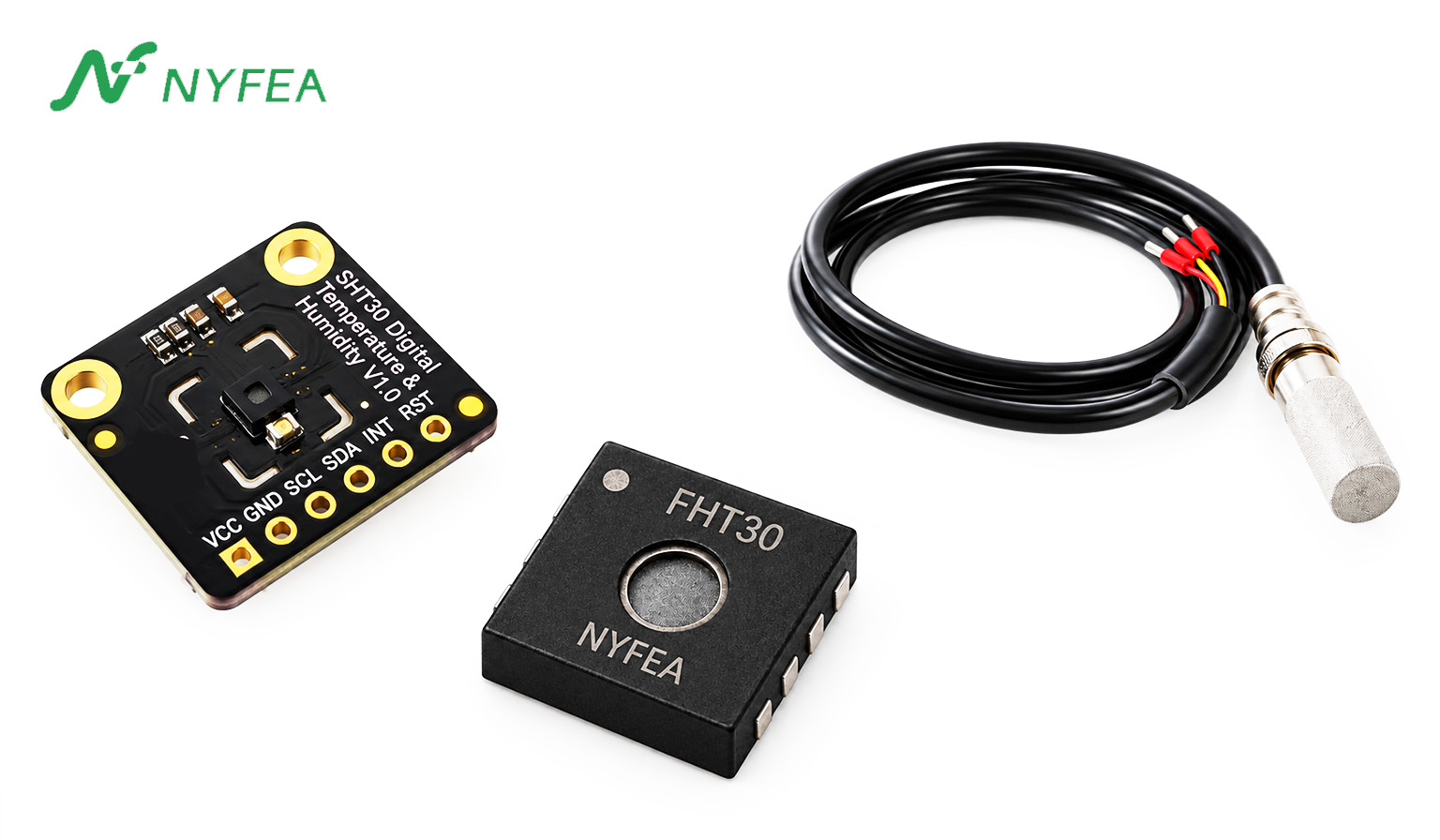
SHT30 Replacement Passes the Bench but Fails in Production: Why 0x44 Is Not Proof of Compatibility.
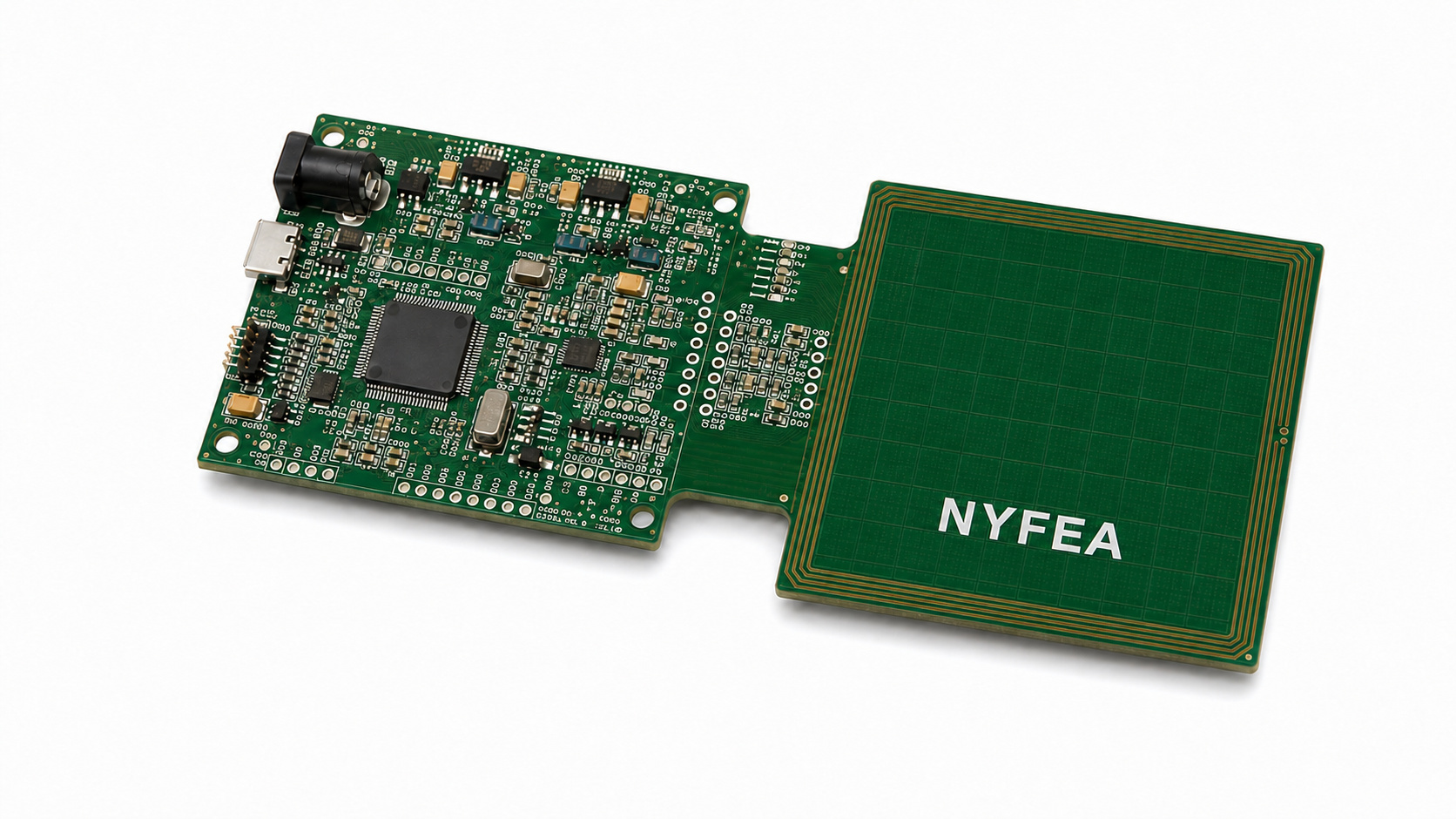
A practical engineering guide to protocol scope, host integration, low-power card detection, antenna validation, and the evidence required before evaluating NF663 in a new or redesigned CLRC663-class reader.
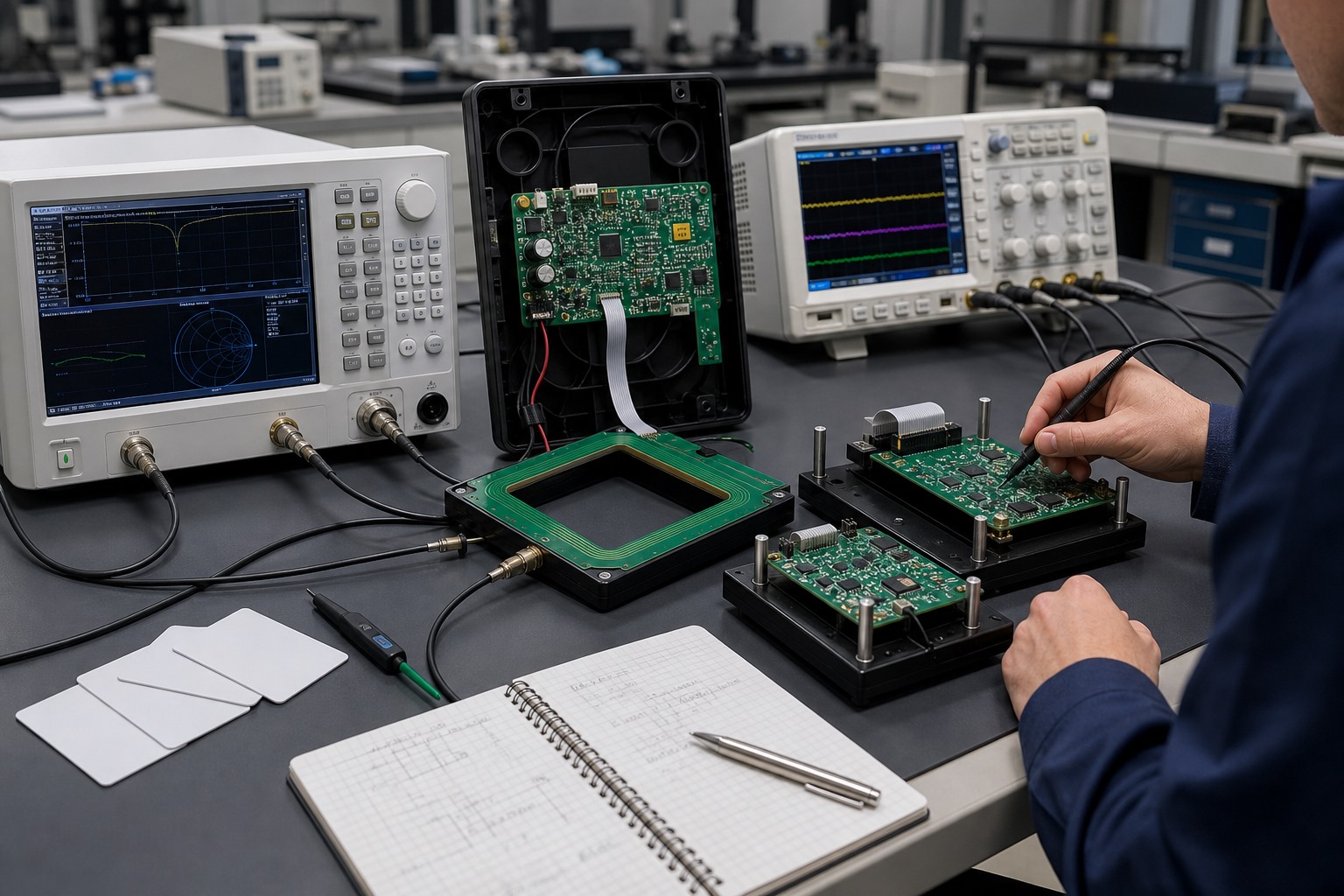
MFRC52202HN1 is the Version 2.0 MFRC522 reader IC now marked End of Life. Review verified device facts, redesign routes and an engineering-led NF522 migration plan.
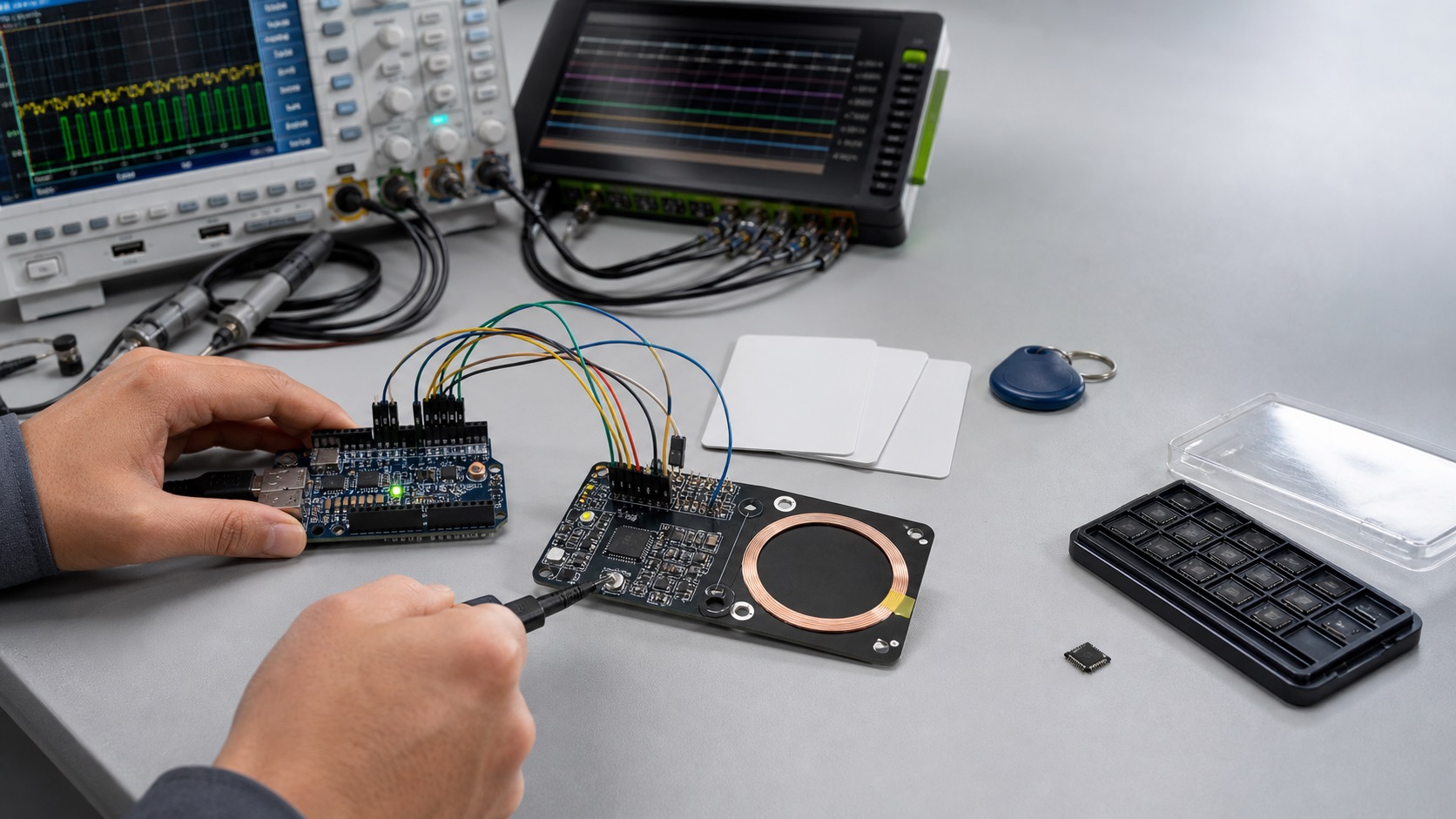
Build and debug an MFRC522 Arduino RFID reader, diagnose card-detection faults, and evaluate NF522 as a board-level migration candidate.
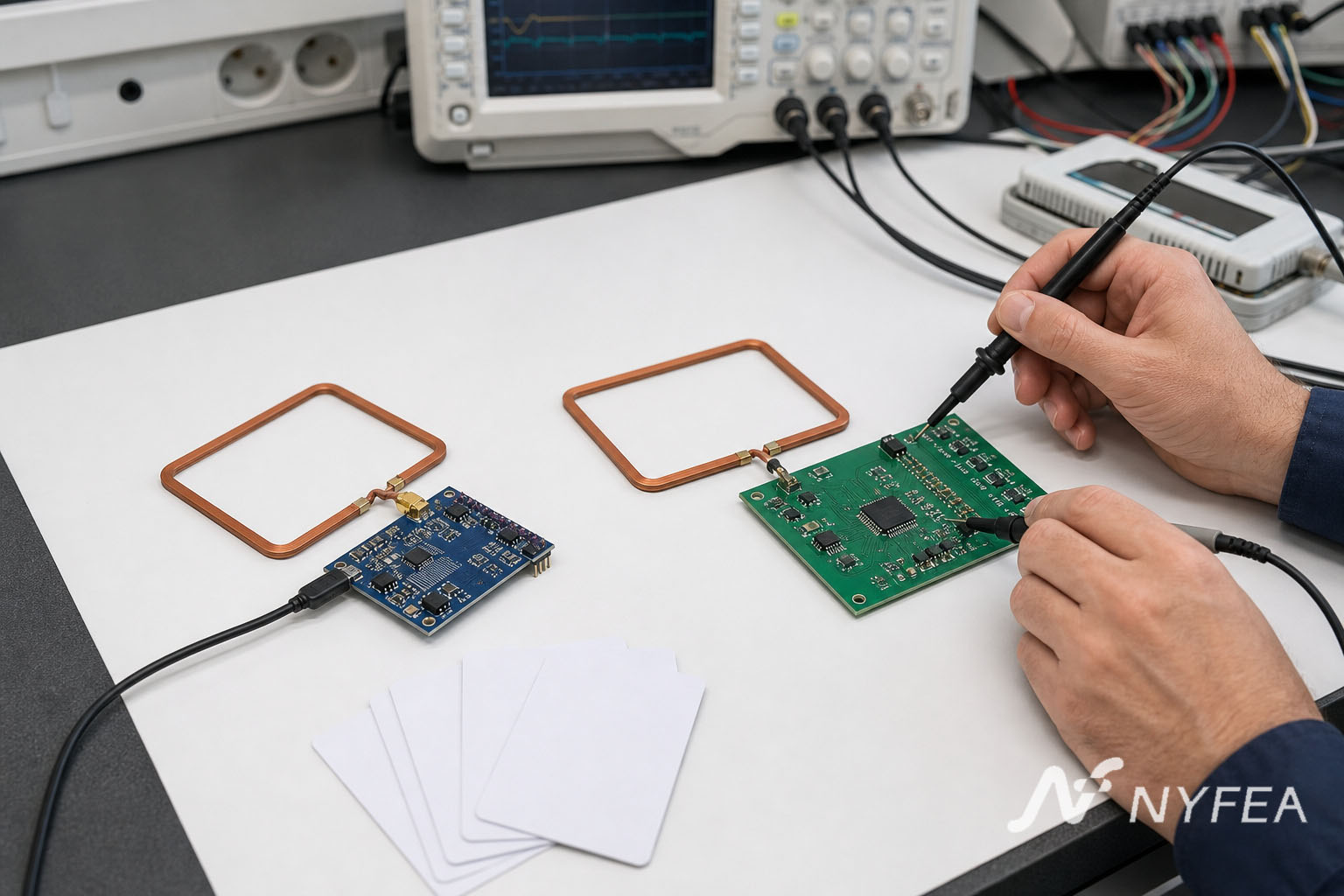
Diagnose MFRC522 card-detection failures across SPI, power, tag protocol and antenna design, then evaluate NF522 for a new reader design.
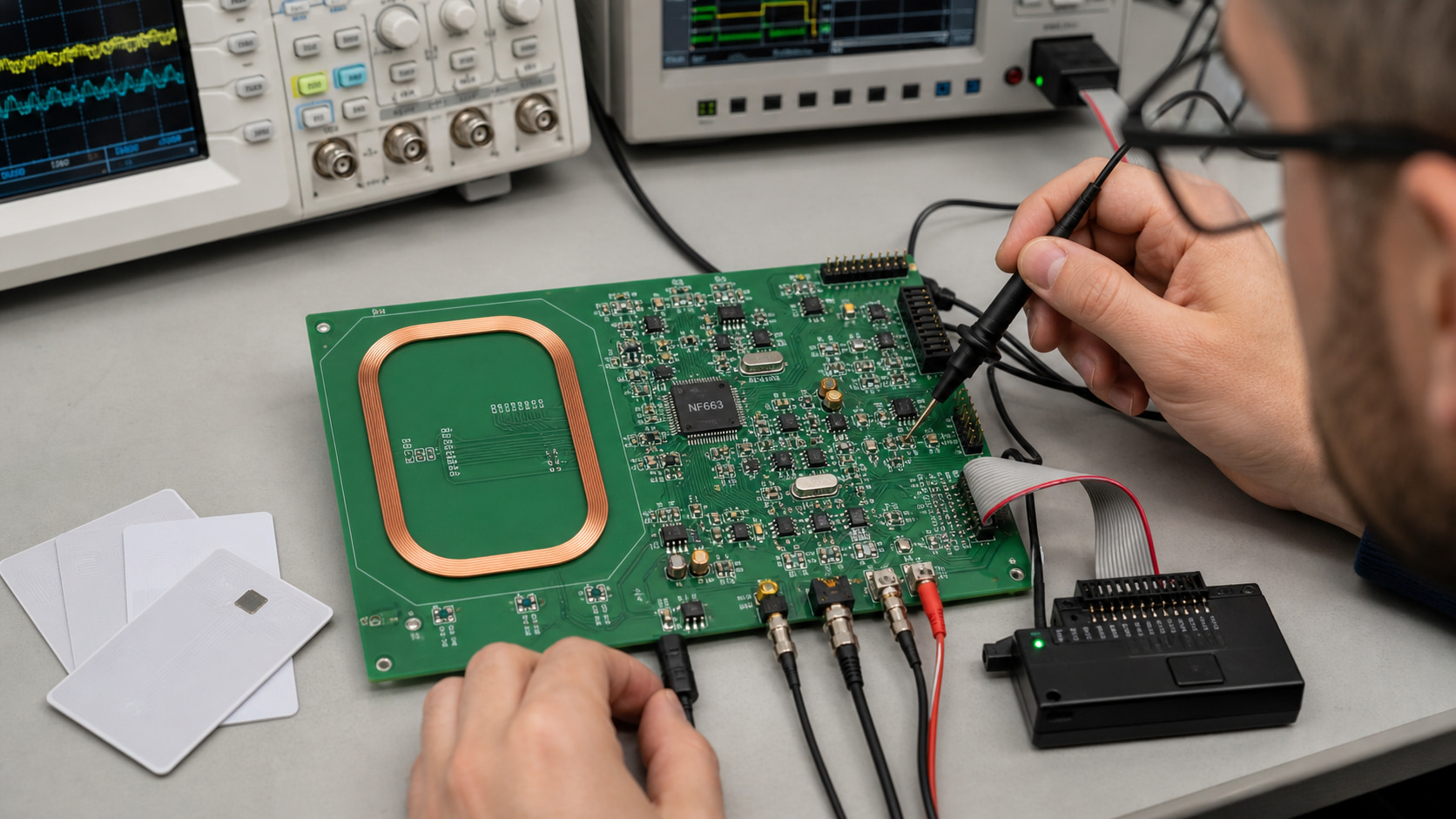
Debug an NF663 reader board from power and SPI through IRQ, FIFO, RF field, antenna matching and reliable card detection.
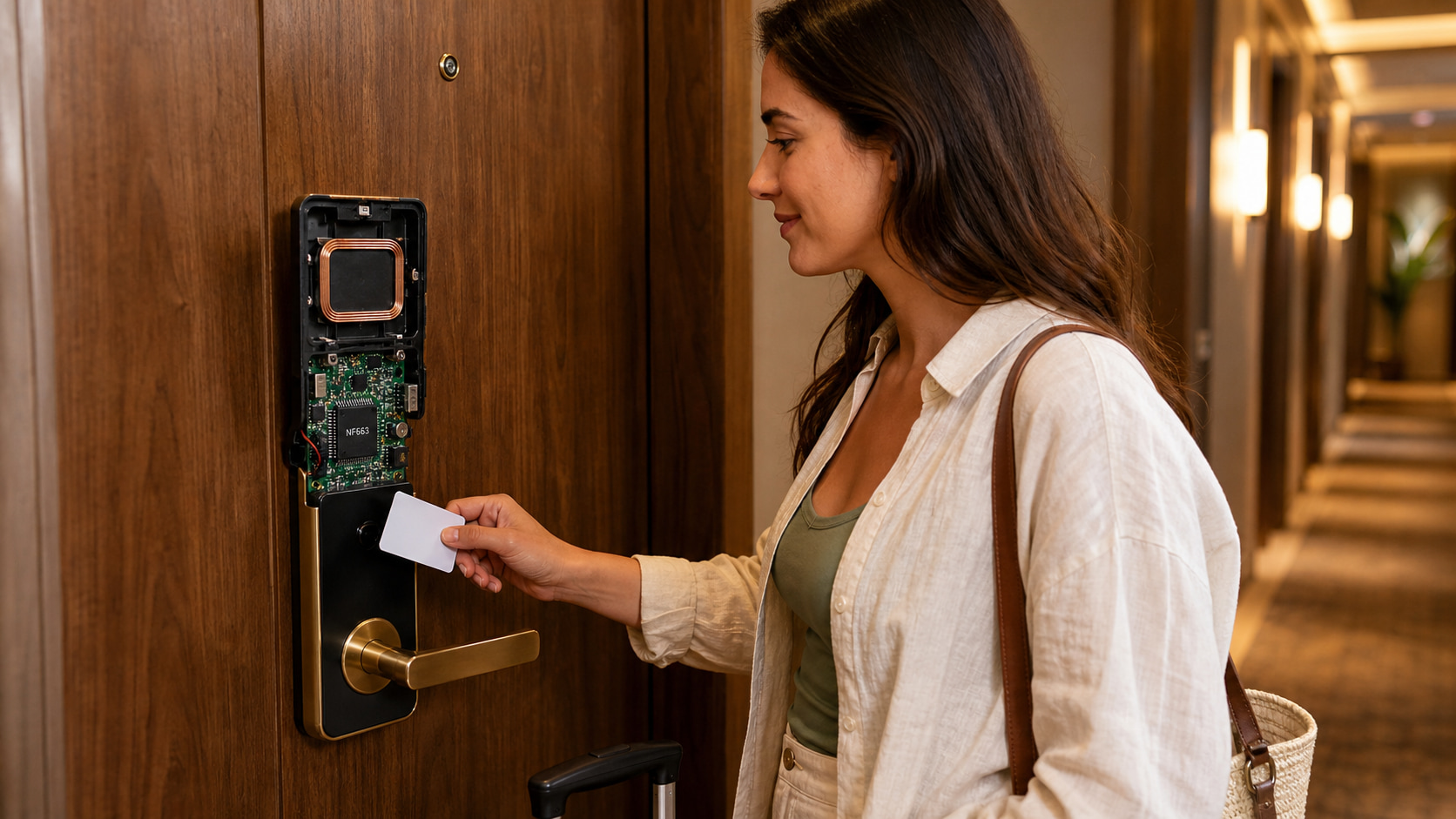
Explore a low-power NF663 smart-lock reader design with SPI, IRQ, LPCD, protected lock control and differential antenna matching.
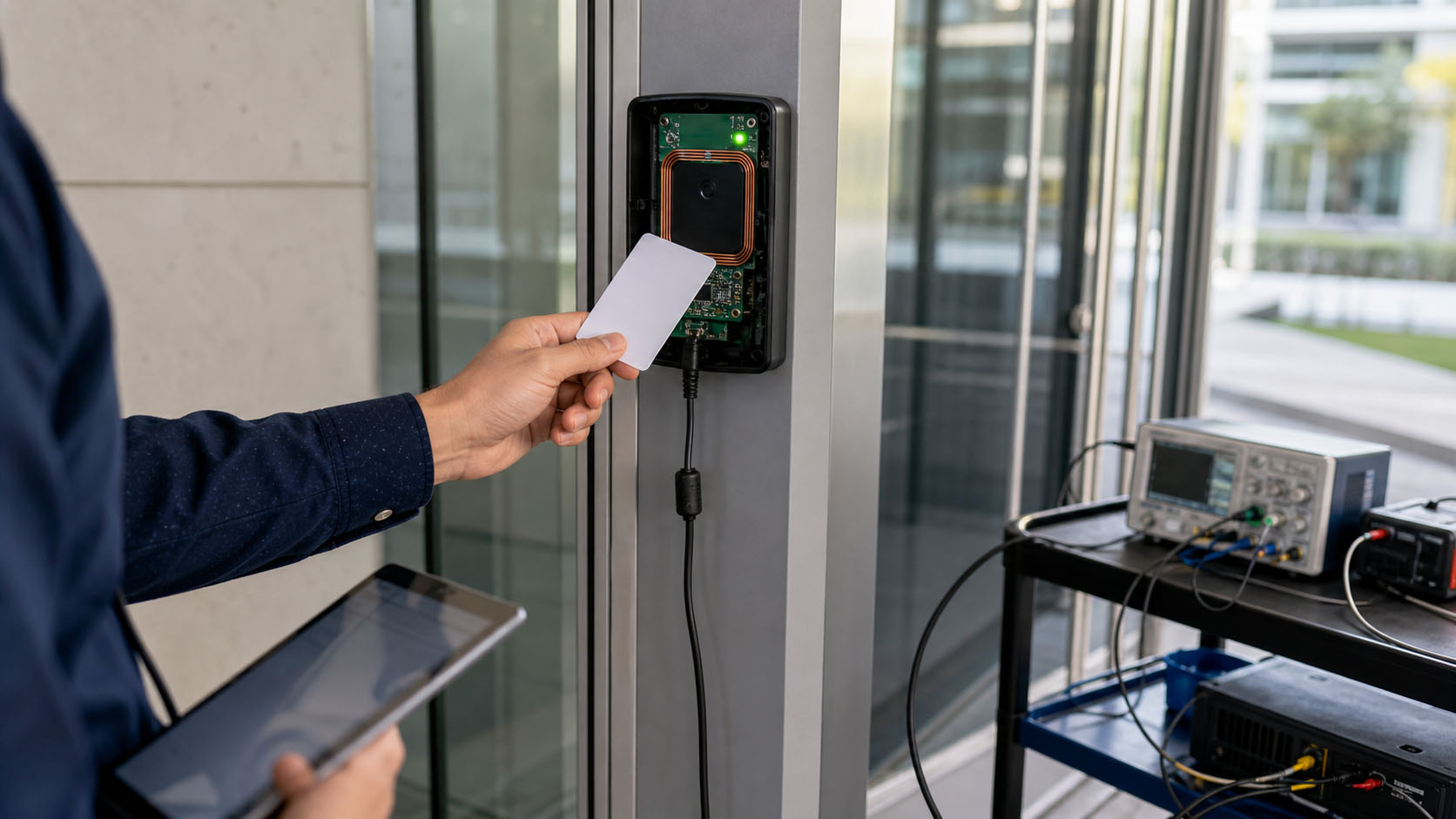
Compare protocols, host interfaces, read range, power modes, antenna requirements and migration factors for 13.56 MHz reader ICs.
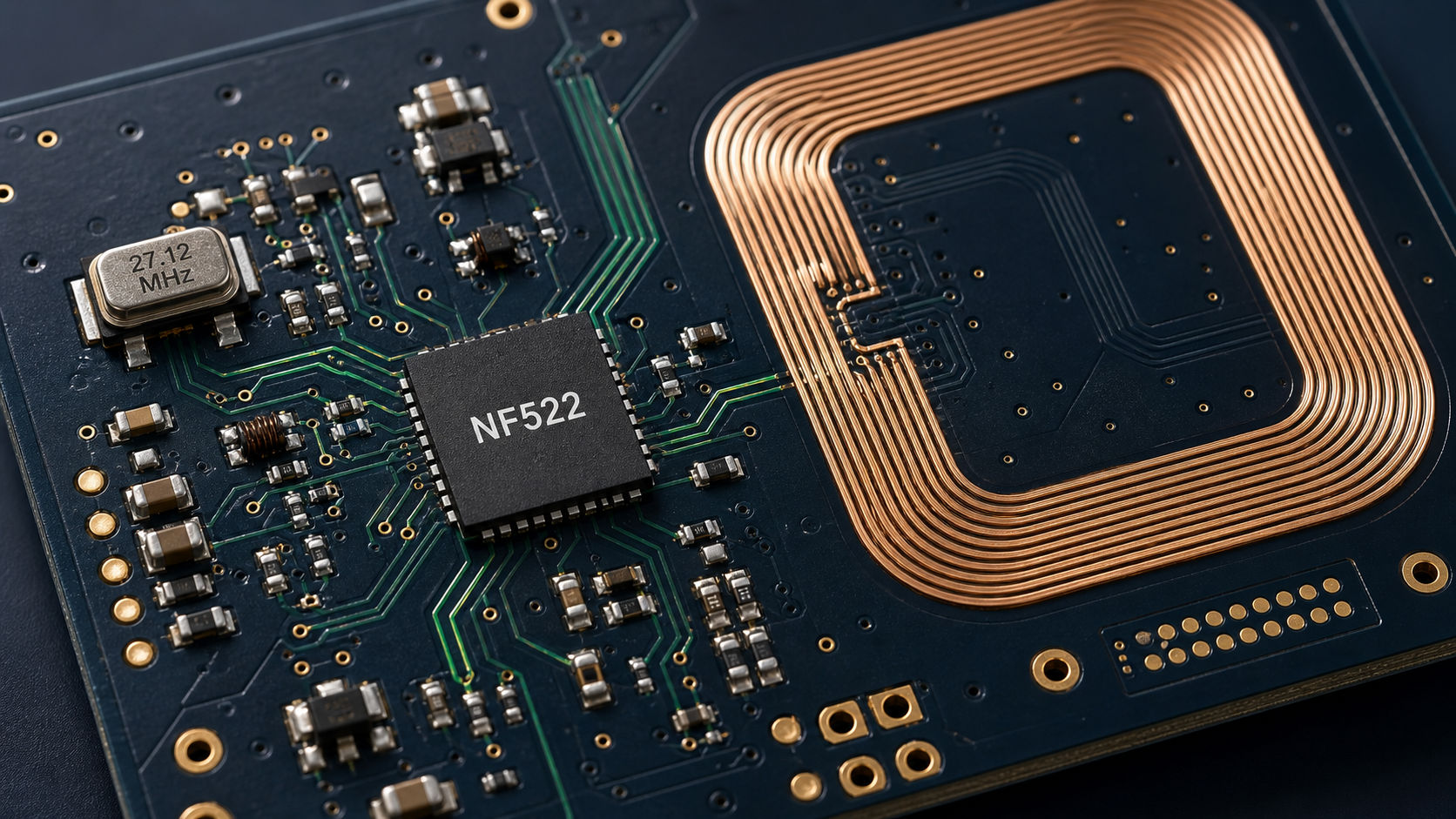
Review NF522 protocol support, host interfaces and low-power card detection when assessing an MFRC522-compatible reader IC.